Biological Markers
The main physiological markers available with Biody Xpert.
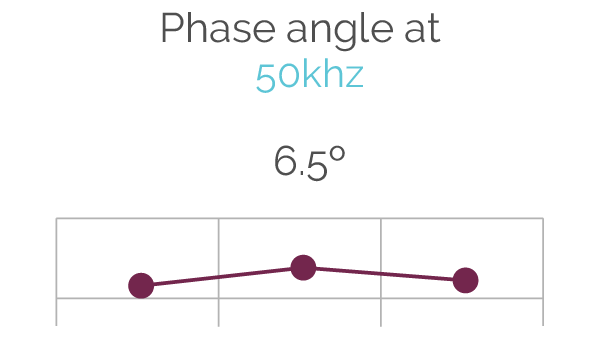
Phase Angle (PhA)
It is the measure of the resistance level (reactance) of cells to the passage of current and therefore their level of reactivity.
High PhA = good physical condition.
Low PhA = health status to be monitored.
PhA below the cut-off = deteriorated clinical state.
Impedance Ratio (IR)
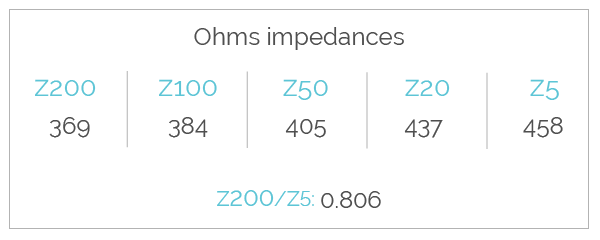
Impedance at the 5 kHz frequency (Z5) is higher than at the 200 kHz frequency. If these two frequencies are close, the IR will be low (between 0.7 and 0.8). If these two frequencies are far apart, it will be high (0.8 to 0.9 or even above 0.9).
Low IR = Good physical condition.
High IR = Poorer physical condition, edema, inflammation, general aging…
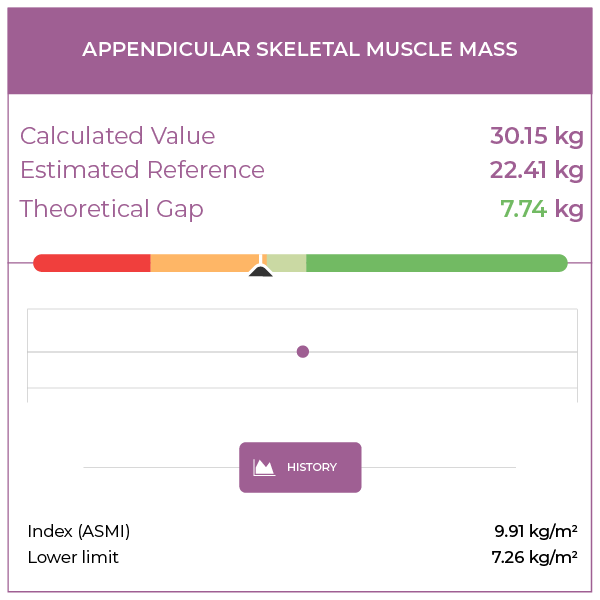
Appendicular Skeletal Muscle Mass
It is the evaluation of the muscles of the limbs.
An appendicular skeletal muscle mass ranging between balanced and high is one representation of the person’s profile.
An appendicular skeletal muscle mass lower than the reference value is to be monitored.
An appendicular skeletal muscle mass whose ASMI index (ratio of appendicular skeletal muscle mass to height squared) is below the lower limit is an indicator of sarcopenia risk.
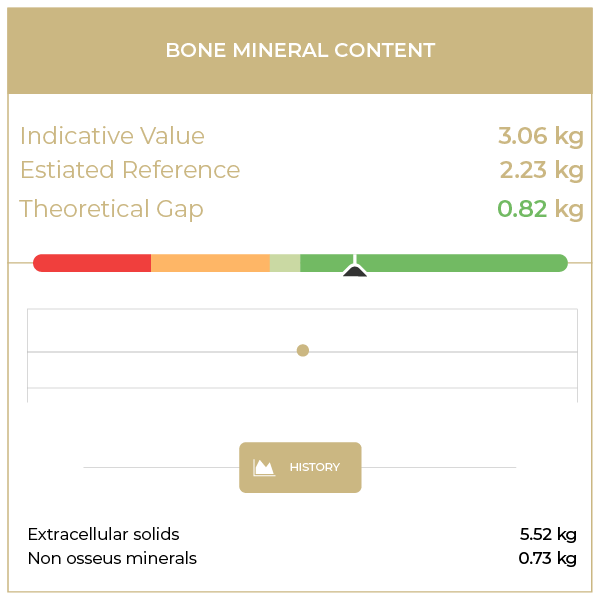
Bone Mineral Content
It is the quantitative evaluation of the minerals contained in the skeleton.
A bone mineral content ranging between balanced and high is one representation of the person’s profile.
A bone mineral content lower than the reference value is to be monitored.
A bone mineral content whose index is lower than 0.8 is an indicator of osteopenia risk.
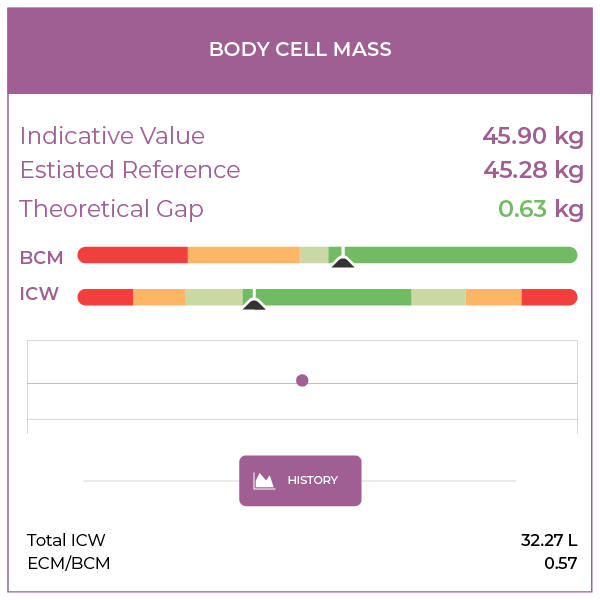
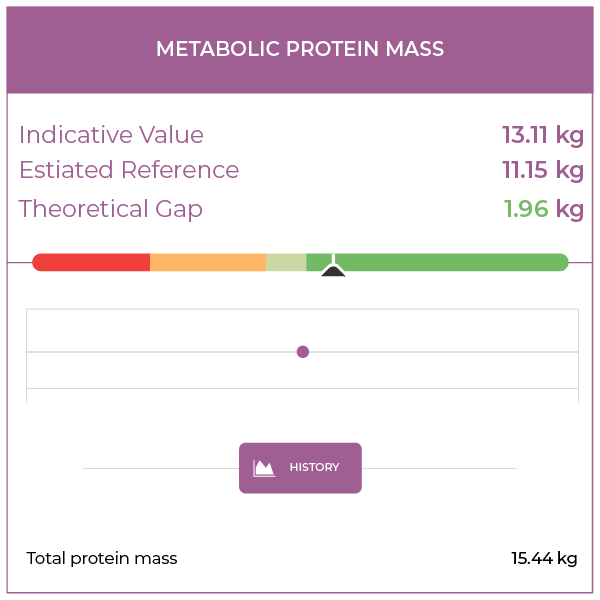
Body Cell Mass, Metabolic Proteins and Intracellular Water
It is the evaluation of all cells and their water/protein balance.
A well-balanced or high body cell mass due to a high protein content is a good representation of the person’s profile.
A well-balanced body cell mass but with a water deficit or excess is to be monitored.
A low body cell mass with a deficit in metabolic proteins is an indicator of malnutrition.
Hydration Level
The Hydration Level excluding water from fatty tissue and the hydration level of the Fat-Free Mass (FFM) are two very important pieces of data that determine if the person is globally correctly hydrated.
We speak of normo-hydration if the person is within the reference values.
Of under-hydration if they are below.
Of over-hydration if they are above.
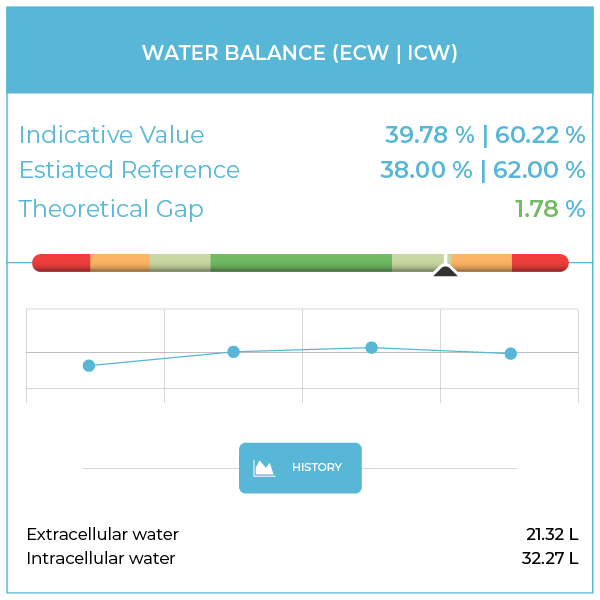
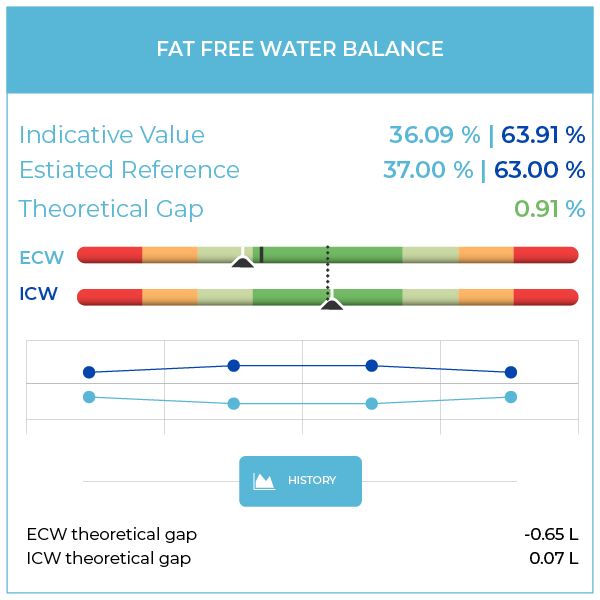
Water Balance and Fat-Free Water Balance
Data also fundamental for the proper functioning of the organism.
The extra/intracellular water balance is the representation of the sodium/potassium balance and intra/extracellular osmotic exchanges.
The fat-free extra/intracellular water balance is the representation of the good or bad level of intra and/or extracellular water in non-fatty tissues.
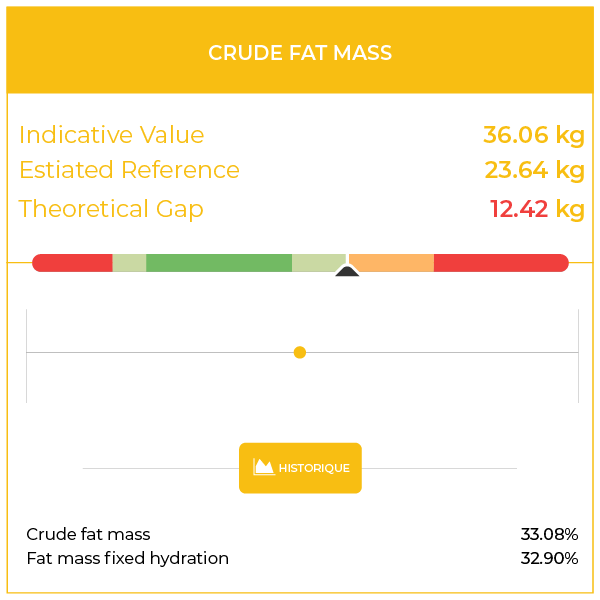
Fat Mass
It is the evaluation of Dry Fat Mass.
This data should be cross-referenced with other indicators. For example, one would be more concerned about a high fat mass coupled with low skeletal muscle mass than a high fat mass coupled with high muscle mass.
The Indexes
These are ratios of the weight in kg of a compartment or tissue related to the person’s height squared in meters.
“FMI” for Fat Mass Index.
“FFMI” for Fat-Free Mass Index (the lower limit follows the latest HAS* recommendations for malnutrition screening).
“SMI” for Skeletal Muscle Mass Index.
“ASMI” for Appendicular Skeletal Muscle Mass Index (whose lower limit is based on the value from bibliography for sarcopenia risk screening).
Evaluation / Risk Reports
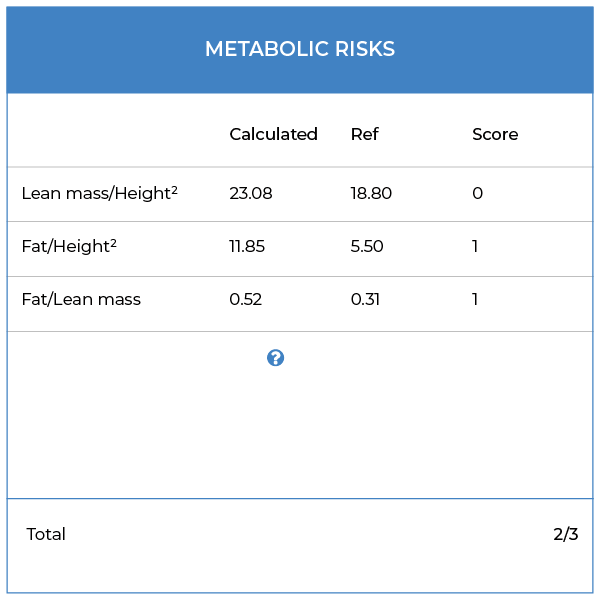
Metabolic Risks
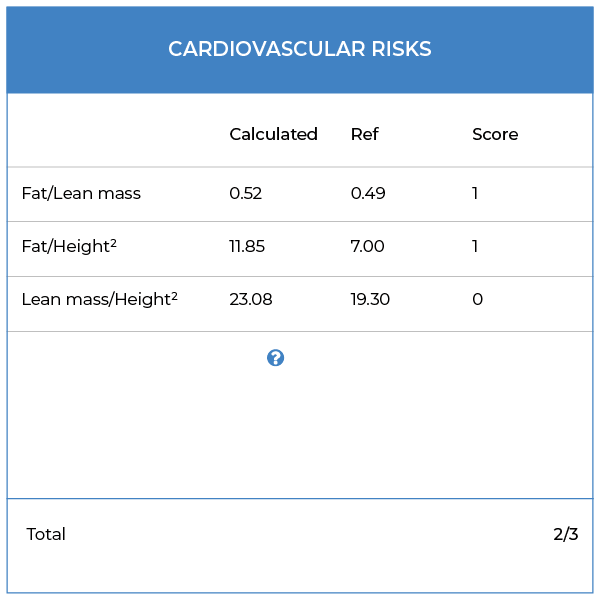
Cardiovascular Risks