



Case study – Limitations of body mass index to evaluate health status

The body mass index, or BMI, is commonly used to detect overweight or obesity quickly, as it is obtained by dividing weight by the squared height, which requires a simple measuring rod and scale. However, although it is relevant to characterise obesity (except in the case of very muscular athletes), its effectiveness to detect overweight […]
Obesity and Sarcopenia: The Importance of Muscle Mass in Management
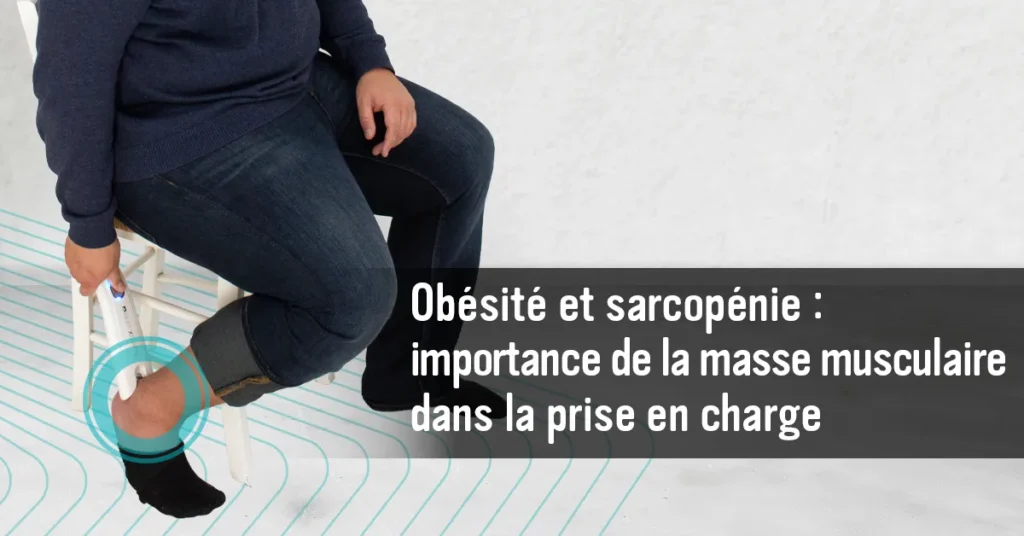
According to a recent expert consensus¹, obesity is defined as a condition characterized by a body mass index (BMI) greater than 30 kg/m², combined with excess fat mass that leads to clinical complications impairing the patient’s health. From a pathophysiological perspective, this excess fat mass causes low-grade systemic inflammation due to the production of pro-inflammatory […]
Concordance between dual indirect methods for assessing fat percentage
Hurtado, B, E Colina, et C.H. Gonzalez-Correa. « Concordance between dual indirect methods for assessing fat percentage ». Journal of Electrical Bioimpedance 15, no 1 (s. d.): 26‑32. https://doi.org/10.2478/joeb-2024-0004
Integrated Multivariate Predictive Model of Body Composition and Lipid Profile for Cardiovascular Risk Assessment
Leyva-Vela, Belén, Maria Martínez-Olcina, Nuria Asencio-Mas, Manuel Vicente-Martínez, Bernardo José Cuestas-Calero, Piotr Matłosz, et Alejandro Martínez-Rodríguez. « Integrated Multivariate Predictive Model of Body Composition and Lipid Profile for Cardiovascular Risk Assessment ». Journal of Clinical Medicine 14, no 3 (janvier 2025): 781. https://doi.org/10.3390/jcm14030781
Hydration Status During the Micturition Cycle Using Bioimpedance for Bladder Monitoring: A Pilot Study
Cordova-Manzo, Jesus Fausto, Gabriela Flores-Mondragon, Gabriel Vega-Martinez, Cinthya L. Toledo-Peral, Arturo Vera-Hernandez, et Lorenzo Leija-Salas. « Hydration Status During the Micturition Cycle Using Bioimpedance for Bladder Monitoring: A Pilot Study ». Consulté le 21 février 2025. https://ieeexplore.ieee.org/document/10770905
Phase Angle and Impedance Ratio as Meta-Inflammation Biomarkers after a Colon Cleansing Protocol in a Group of Overweight Young Women
Tapasco-Tapasco, L. O., C. A. Gonzalez-Correa, et A. Letourneur. « Phase Angle and Impedance Ratio as Meta-Inflammation Biomarkers after a Colon Cleansing Protocol in a Group of Overweight Young Women ». Physiological Measurement 45, no 5 (mai 2024): 055021. https://doi.org/10.1088/1361-6579/ad46df